

Pristina passes changes to Specialist Chambers law
Lawmakers finished the parliamentary procedure overnight on October 7, just before electing Justina Siroka Pulja as president, a post to which the law grants the power of pardon.
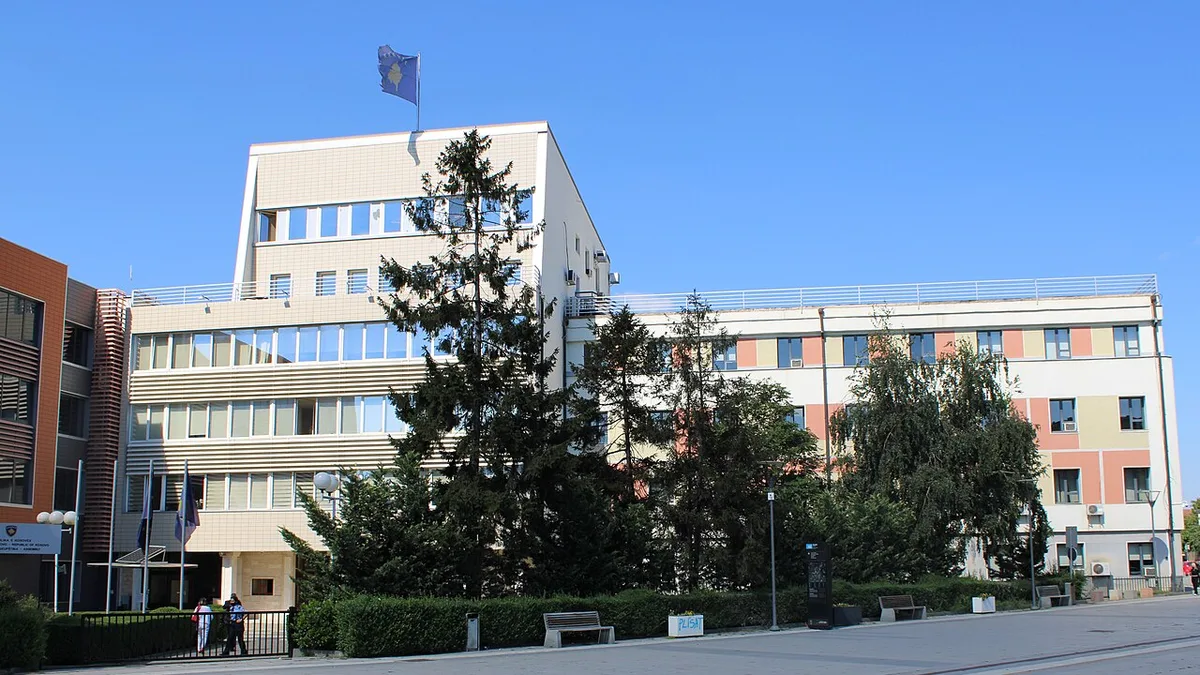
The Kosovo Assembly passed amendments to the Law on the Specialist Chambers and Specialist Prosecutor’s Office in a second reading overnight between October 6 and 7, completing the parliamentary procedure. 88 deputies voted for the changes, according to RTV. KoSSev’s report gives the figure 89, but for a different decision: that many deputies, with no votes against and no abstentions, backed departing from the regular deadlines and sending the law to parliamentary committees urgently.
The vote took place shortly before midnight, and the election of a president began right after it. Justina Siroka Pulja, president of the Academy of Sciences and Arts, received 81 votes. The law that had just passed gives the president of Kosovo the power to individually pardon people convicted by a final judgment, and she was elected the same night, minutes after the law was adopted.
What changes in the court’s work?
Under the text that passed its second reading, the Specialist Chambers in The Hague would lose a large share of their caseload. The amendments provide for:
- jurisdiction only over the cases in the report by Dick Marty, the Council of Europe’s special rapporteur, on the illegal removal and trafficking of human organs; other war crimes, crimes against humanity and political violence move to the courts and prosecution in Kosovo, and murders and torture stay in The Hague only when they are directly tied to organ trafficking
- a shorter time frame: instead of January 1, 1998 to December 31, 2000, the court would try offenses from July 1, 1999 to December 31, 2000
- a maximum sentence of 15 years, instead of life imprisonment
- serving sentences in Kosovo prisons, instead of in a country chosen by the presiding judge from among those that agreed to accept convicts
- appeals to the Supreme Court of Kosovo, as RFE/RL reports
- pardons, which would rest with the president of Kosovo
Why was the law written?
The Democratic Party of Kosovo (PDK) filed the proposal on September 21, five days after the Specialist Chambers’ verdict of September 16. In that verdict Hashim Thaci and Jakup Krasniqi were each sentenced to 25 years in prison, Kadri Veseli to 18 and Rexhep Selimi to 13, 81 years in total. All four were found guilty of war crimes and acquitted of crimes against humanity. According to the verdict, Thaci is responsible for the unlawful detention of at least 385 people, the cruel treatment of at least 49, the torture of at least 303 and the murder of 96, Telegraf writes. The verdict is a first-instance ruling, and the defense teams have announced appeals.
PDK deputy Perparim Gruda explained in the October 5 debate that the amendments do not limit the court in organ trafficking cases but return war crimes cases to Kosovo: “For the former leaders, if there is a case at the Supreme Court, it will be handled in Kosovo.” PDK leader Bedri Hamza says the aim is stronger oversight and accountability, not tearing down the court, RFE/RL reports.
How did the law reach a second reading?
In the first reading on October 5, 91 deputies voted for the draft according to RFE/RL and Telegraf, while the headline of one KoSSev story mentions 90 votes. Prime Minister Albin Kurti backed the initiative but called it rushed, adding that the appeals process is the route for contesting the verdict. The PDK made passage of the law a condition for voting on a president, and the constitutional deadline for the election expires on October 6.
During October 6, Kurti changed his offer several times. He first cited the 72-hour gap between the two readings as an obstacle to finishing the law the same day, and the parliamentary majority then removed it a few dozen minutes before midnight. Hamza rejected one of the earlier offers as a “bazaar in the final minutes.” Shortly after 10 p.m. Kurti proposed Justina Siroka Pulja, a former energy minister in Hashim Thaci’s first government and later a PDK deputy, and the session was given two items: first the law, then the election of a president. Around 11 p.m. Hamza announced that the candidate was acceptable and that all 22 PDK deputies would come to the chamber.
Supporters of the KLA gathered outside the building in those days. On October 5 police used tear gas, six officers were injured, 11 civilians sought medical help and three demonstrators were detained. Hysni Gucati, head of the organization of former KLA members, announced, according to RTV, that protesters would not come empty-handed but with stones and bricks, adding: “Since Albin wants to go all the way, then so will we.” Demonstrators greeted the passage of the law with chants of “KLA, KLA.”
Will the changes be able to take effect?
Lawyers and politicians warn that passage in the Assembly does not settle the matter by itself. Deputy Jehona Lushaku-Sadriu of the Democratic League of Kosovo said that adoption does not guarantee implementation and that the amendments may have no legal effect. Ehat Miftaraj of the Kosovo Law Institute told RFE/RL that Kosovo has international obligations, including consulting the European Union on changes that touch the court’s mandate, and that the Specialist Constitutional Court in The Hague could review the amendments. At the end of September the Specialist Chambers said they had not been consulted and declined to comment on political initiatives.
European Commission President Ursula von der Leyen said in Pristina on October 1 that the decision on the amendments rests with Kosovo, but that judicial independence must be guaranteed and the court’s mandate must be fully respected. The State Department had not responded to that outlet’s inquiry by the time RFE/RL published its text.


