Justina Siroka Pulja Elected Kosovo President, 81 Votes
The opposition PDK backed the Self-Determination candidate in exchange for changes to the Specialist Chambers law. A fourth snap election in under two years was avoided.
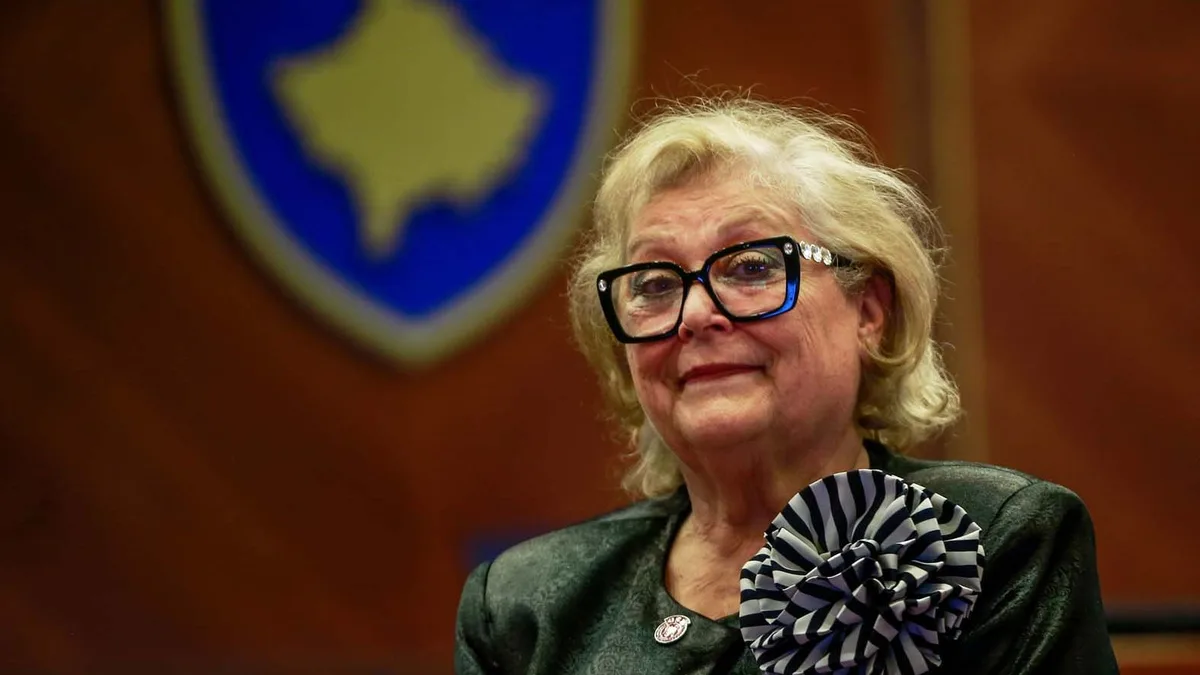
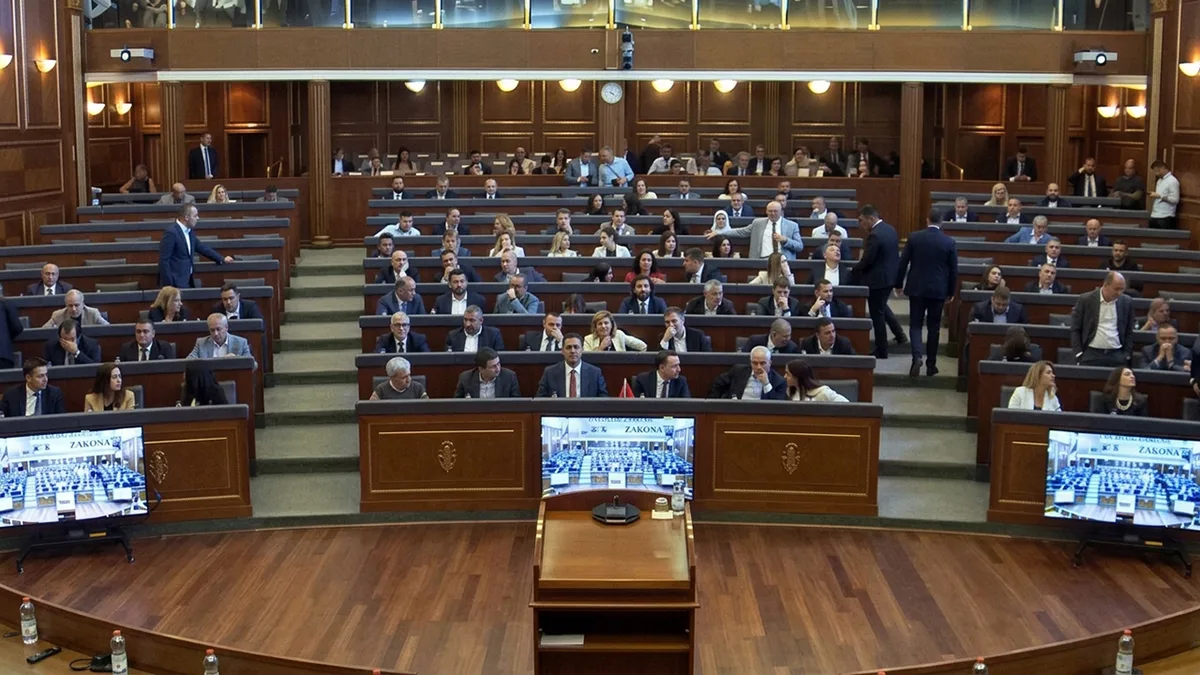
The Kosovo Assembly elected Justina Siroka Pulja president of Kosovo in the night between October 6 and 7, in the first round, with 81 votes in the 120-seat chamber. The vote ended at 12:03 a.m., just after the Constitutional Court deadline had expired, and she took the oath a little less than half an hour later. The result spared Kosovo a fourth parliamentary election in less than two years.
In our previous article on this topic, we reported that the deadline expired on October 6 and that Prime Minister Albin Kurti and Democratic Party of Kosovo (PDK) leader Bedri Hamza had no agreement. The deal came in the last hour: the PDK accepted the candidate of the Self-Determination movement, and Self-Determination in return committed to voting for the PDK’s amendments to the Law on the Specialist Chambers.
What led to the deal in the final hour?
Since February 2025, Kosovo has gone through three parliamentary election cycles, the latest on June 7, 2026. In late September the Constitutional Court ruled that the 60-day period for electing a president began on August 8 and ends on October 6. Had no president been elected, the Assembly would have been dissolved and new elections held within 45 days. Assembly Speaker Albulena Haxhiu had been acting president since May 4, when Vjosa Osmani’s term expired.
Over the course of October 6, Kurti changed his proposal several times. First he demanded that at least half of the PDK’s deputies take part in the vote for Bekim Sejdiu, with a second reading of the law amendments on Thursday. Sejdiu repeated that he does not consider himself part of the process, since he withdrew his candidacy on September 14. Kurti then offered the names of Gjylka Konjufca and Feride Rushiti, and for the first time agreed to vote on the law amendments before the president, provided the PDK guaranteed its deputies’ participation. Hamza rejected that offer as a “bazaar in the final minutes.”
Shortly after 10 p.m., Kurti came out with a new name: Justina Siroka Pulja, president of the Kosovo Academy of Sciences and Arts. He proposed an extraordinary session with two items, first the second reading of the law amendments, then the election of the president. Kurti admitted he had not contacted her beforehand. In her first reaction she said she had not yet spoken with the people she needed to and could not immediately confirm the decision, but she soon accepted the candidacy.
Around 11 p.m., Hamza announced that Siroka Pulja was acceptable to the PDK and that all 22 of the party’s deputies would enter the chamber. The PDK put forward its own deputy, Eljiza Hoxha, as a rival candidate. Hamza said the deal should have been reached much earlier. After hours of trading accusations through press conferences, Kurti and Hamza shook hands in the chamber, and deputies from all Albanian parties attended the session.
What do the Specialist Chambers amendments provide?
The Assembly voted 89 to 0, with no abstentions, to depart from the regular procedural deadlines and send the amendments straight to committees. The committees reviewed and approved them urgently, and shortly before midnight the law passed its second reading with 88 votes in favor. The 72-hour gap between the two readings, which Kurti had cited that afternoon as a procedural obstacle, was thus waived by majority decision a few dozen minutes before midnight.
Under the text of the amendments, the Specialist Chambers in The Hague would try only cases linked to allegations in the Dick Marty report on the illegal harvesting and trafficking of human organs. The maximum sentence would be 15 years in prison instead of life, convicts would serve their sentences in Kosovo prisons, and the court’s mandate would start on July 1, 1999, rather than January 1, 1998. The amendments also provide that the president may individually pardon people convicted by a final judgment. The PDK submitted the law after September 16, when the Specialist Chambers convicted Hashim Thaci, Kadri Veseli, Jakup Krasniqi and Rexhep Selimi at first instance and sentenced them to a combined 81 years in prison.
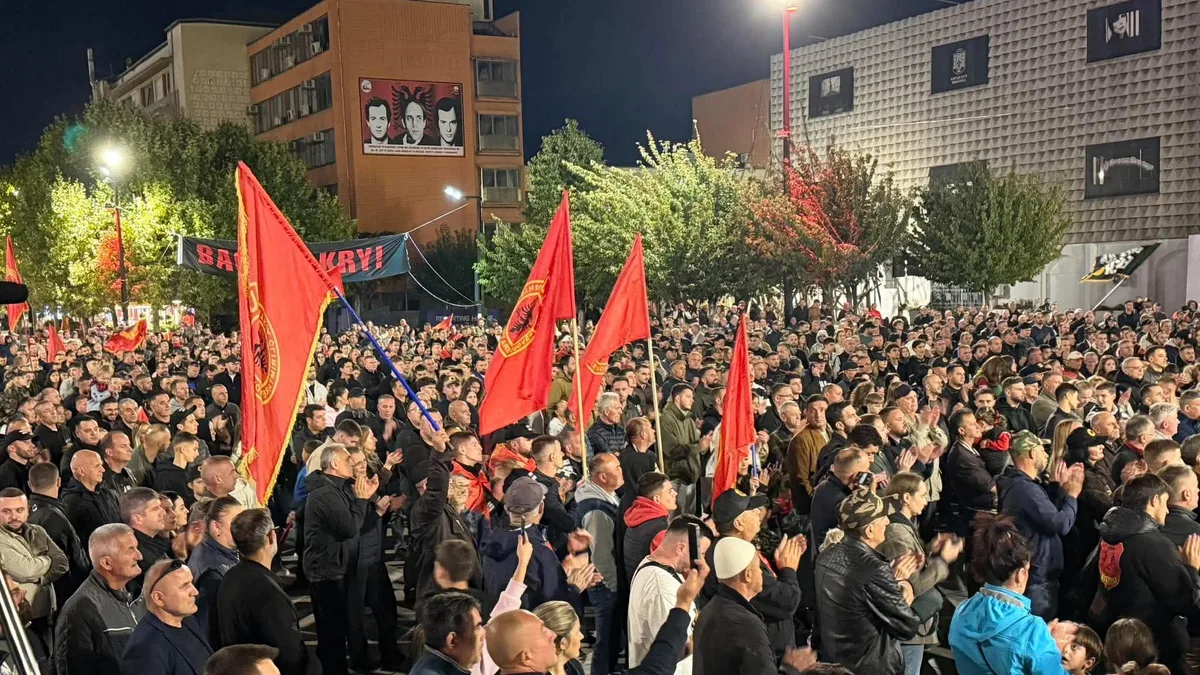
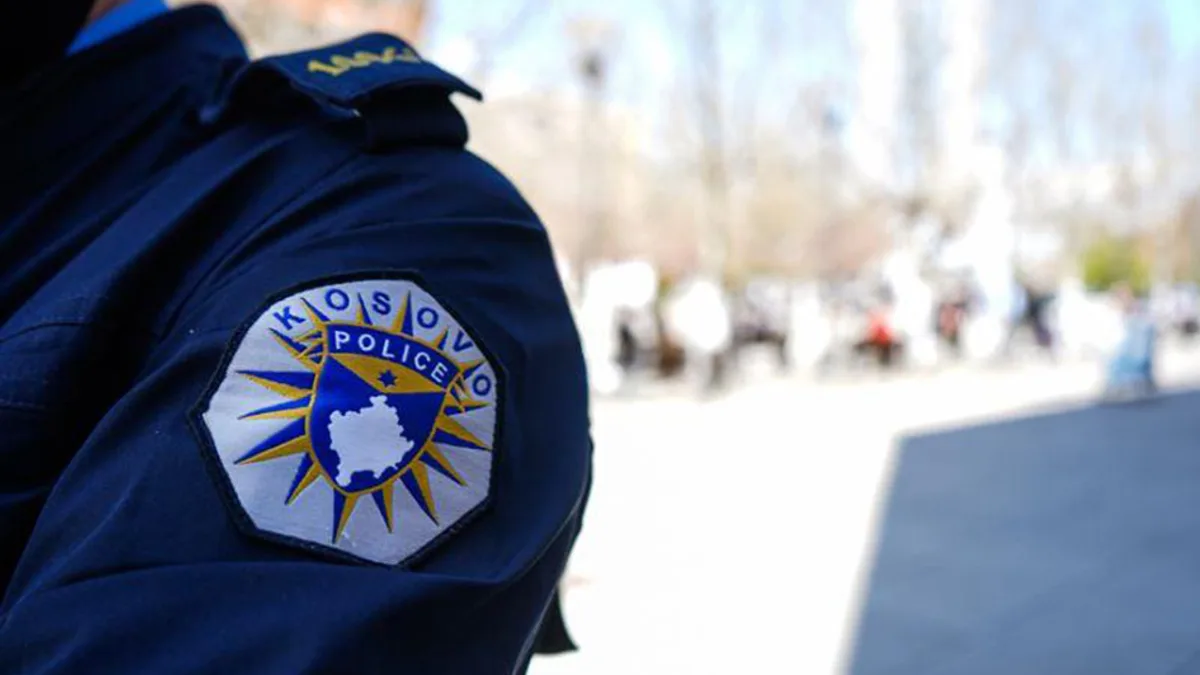
The issue also carried a charge on the street. On Monday evening police used tear gas and water cannons against demonstrators demanding that the amendments be adopted, and said six officers and 11 demonstrators were injured. Demonstrators outside the Assembly greeted the passage of the law with chants of “KLA, KLA.”
Siroka Pulja herself has publicly criticized the way the Specialist Chambers were designed:
“Criminal proceedings against individuals should not turn into a general verdict on a movement, a historical period or a people’s aspiration to freedom. Therefore, while respecting everyone’s right to a fair trial and all available legal remedies, we express deep reservations about how this court was conceived and how it is perceived, as well as about the consequences it may have for historical memory, public trust and the sense of justice,” she said.
How many votes did she get, and what did she say after the oath?
Voting on the president began before midnight and ended at 12:03 a.m., with the count finished at 12:14. Eljiza Hoxha received one vote, and two ballots were invalid. A two-thirds majority of 120 deputies is 80 votes, and Vreme notes that 81 votes in favor is one more than required.
Siroka Pulja took the oath before the Assembly, received flowers, and the anthem was then played. In a prepared speech she said:
“This mandate does not belong to one person alone, it belongs to our citizens, our institutions and the state for which many generations made sacrifices. I will be a president of all citizens. I will work for unity, justice, development and the strengthening of our institutions. Kosovo must advance as a democratic, secure state with a clear Euro-Atlantic orientation and strong friendship with our allies. I will protect the Constitution, the interests of the Republic and the dignity of our citizens. I believe in Kosovo and its people, and I believe that together we can build a better future for the generations to come. May God bless the Republic of Kosovo.”
Albanian President Bajram Begaj congratulated her on Facebook, writing: “In every challenge and at every step toward a European future, Albania and Kosovo will be together.” Albanian Prime Minister Edi Rama said the Kosovo president had been elected at a challenging time for Pristina, the region and all of Europe, and added: “I wish you great luck and success, as well as Kosovo, Madam President.”
Was the election completed within the deadline?
Sources do not agree on how late the vote ran. KoSSev and Danas report that the election was completed three minutes after the deadline, Radio Free Europe says 13 minutes, which matches the moment the votes were counted, and Vreme writes that the vote ended just before the deadline expired. Danas adds that lawyer Arianit Koci notified the Constitutional Court of non-compliance with the ruling that required a president to be elected by October 6.
Former Constitutional Court president and constitutional law professor Enver Hasani judged that this is not a constitutional problem:
“What matters is that the process started on time. The counting and announcement of the results, even if they run a few minutes past the deadline, do not raise a constitutional issue.”
Hasani added that the Assembly is not considered dissolved by the mere expiry of the deadline, because dissolution requires a formal decree, and that “the country got institutions with a full constitutional mandate at the last moment.”
Who is Kosovo’s new president?
Justina Siroka Pulja was born in 1953 in Pristina, where she finished primary and secondary school, and in 1976 the Faculty of Economics. She completed postgraduate studies in Zagreb in 1984, earned her doctorate at the University of Pristina with a thesis titled “Demographic Investments and the Economic Development of Kosovo,” and did postdoctoral studies at the University of Linz in Austria and the University of Arizona. She has taught at the Faculty of Economics in Pristina since 1978 and has also worked at the Central Bank of Kosovo.
In politics she was minister of energy and mining from 2008 to 2011 in Hashim Thaci’s first government, and then a PDK deputy in the Kosovo Assembly until 2014. Since December 19, 2025, she has chaired the Kosovo Academy of Sciences and Arts, the first woman in that post. Danas reports that she and the PDK had earlier ruled out the possibility of her being that party’s candidate. N1 describes rival candidate Eljiza Hoxha as a university professor. The presidency in Kosovo is largely ceremonial.