Kosovo Court: two filings over Siroka Pulja election
A lawyer and a former prime ministerial adviser turned to the Constitutional Court because the vote ended after the deadline. Experts say only ten deputies can challenge it, within eight days.
Two filings reached Kosovo’s Constitutional Court on October 7 because the presidential vote ended after the deadline the court itself had set. Lawyer Arijanit Koci submitted a notice of what he says is non-compliance with the ruling, while Durim Berisa, a former adviser to Prime Minister Albin Kurti who later joined the Democratic Party of Kosovo (PDK), asked the court to find on its own motion that the ruling was not carried out and that the Assembly stands dissolved. Legal experts who spoke to Radio Free Europe say filings like these do not, on their own, start any proceedings.
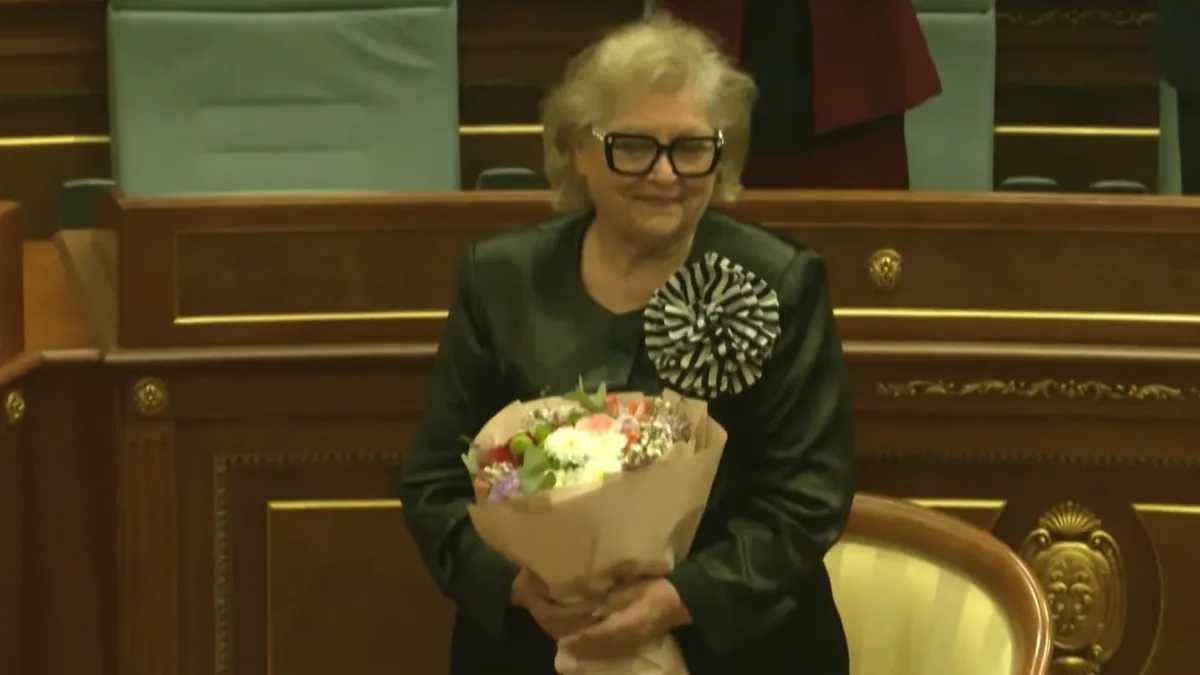
Justina Siroka Pulja was elected with 81 votes, as we have already reported. What is new is the assessment of what followed: who may challenge the election, within what time limit, and what happened at the inauguration ceremony in the meantime.
Why does it matter that the vote ended after midnight?
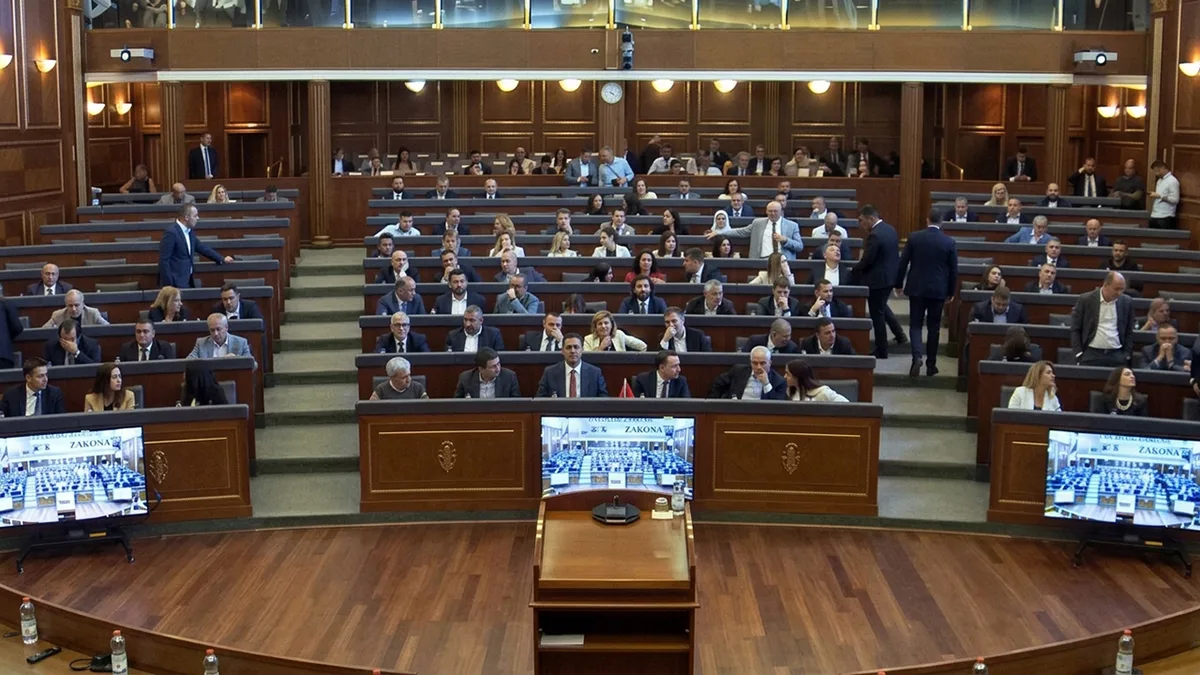
In cases KO256/26 and KO258/26, the Constitutional Court established that the 60-day deadline for electing a president began running on August 8 and expires on October 6. According to Radio Free Europe, voting in the Assembly began on Tuesday at 11:55 p.m. and ended at 12:07 a.m. on Wednesday, and at 12:13 a.m. it was declared that Siroka Pulja had been elected. Eljiza Hodza received one vote, and two ballots were invalid. In our first report on the election we said the vote ended at 12:03 a.m., while KoSSev says only that the procedure finished a few minutes after midnight. The sources differ on the minute, not on the fact that midnight had passed.
Koci relies on the court’s decision, under which the procedure should have been completed by October 6, with the consequence of the Assembly’s dissolution. Berisa, in his filing on the “non-compliance” with the September 29 ruling, asked the court to fulfill its role as “guardian of the Constitution.” Ehat Miftaraj of the Kosovo Institute for Justice (KIJ) said even before the vote that failing to elect a president within the deadline would mean the Assembly’s dissolution.
Who can challenge the election of the president?
Naim Jakaj of KIJ explained to Radio Free Europe that a citizen or a lawyer cannot start such a procedure:
“A citizen or a lawyer can notify the Court, but cannot in their own name seek an abstract review of the constitutionality of the Assembly’s actions. That requires parties authorized by the Constitution, among them at least ten members of the Assembly,” Jakaj said.
In his words, a notice can serve as a signal of non-compliance with a ruling, but it is not a formal request that obliges the court to open a new case. Jakaj added that it is also possible to ask the court for a clarification, given developments after the deadline expired: “The judgment of this court clearly established that the deadline for electing the president expires on October 6 and that the procedure should have been carried out and completed within that deadline.”
Eugen Cakoli of the Kosovo Democratic Institute (KDI) gives the same reading. According to him, at least ten deputies can directly challenge the Assembly’s decision, within eight days of its adoption. “Sending a single ‘notice’ to the Constitutional Court has, in itself, no suspensive effect on the election,” Cakoli said in a Facebook post, and in the same post he wrote: “If no request is filed within that deadline, this route of challenge is closed.” In his reading, even if it is claimed that the Assembly violated the ruling, it must be determined whether the conditions for dissolving the Assembly have been met, and the court cannot automatically annul the new decision outside Article 113, paragraph 5 of the Constitution.
There is a domestic precedent for that route. A year ago the Serbian List used the right of deputies and went to the Constitutional Court with a request signed by ten deputies, nine from that party and Adem Hodza. It concerned the election of a deputy speaker of the Assembly from the Serbian community: Nenad Rasic of the For Freedom, Justice and Survival party was chosen, although a majority of the deputies from the Serbian community had not proposed him. Deputy Vjosa Osmani of the Democratic League of Kosovo (LDK) said on October 6 that her party would not take the matter to the Constitutional Court over the election of the president after the deadline.
What do Hasani and the Ombudsperson say?
Former Constitutional Court president Enver Hasani believes there is no constitutional violation, because voting began within the deadline, and counting the ballots and announcing the result a few minutes after midnight is not a constitutional question. In his reading, the Assembly cannot be considered dissolved and remains fully valid.
The Ombudsperson Institution of Kosovo replied to Radio Free Europe in writing:
“We have not currently received any request regarding this issue and we are not considering it in a separate procedure.”
The institution added that it will follow developments and, if a concrete question within its mandate arises, will assess it in line with the Constitution and the law.
How did the inauguration go?
The Presidency of Kosovo announced in the morning that the ceremony would be held in the afternoon: “The inauguration ceremony of the President of the Republic of Kosovo, Her Excellency Justina Siroka Pulja, will be held at 3 p.m.” Acting president Albulena Haxhiu handed over the office and gave her the Constitution of Kosovo. According to Radio Free Europe, Haxhiu said Siroka Pulja would always have her support, and Siroka Pulja said she would continue the work Haxhiu had started.
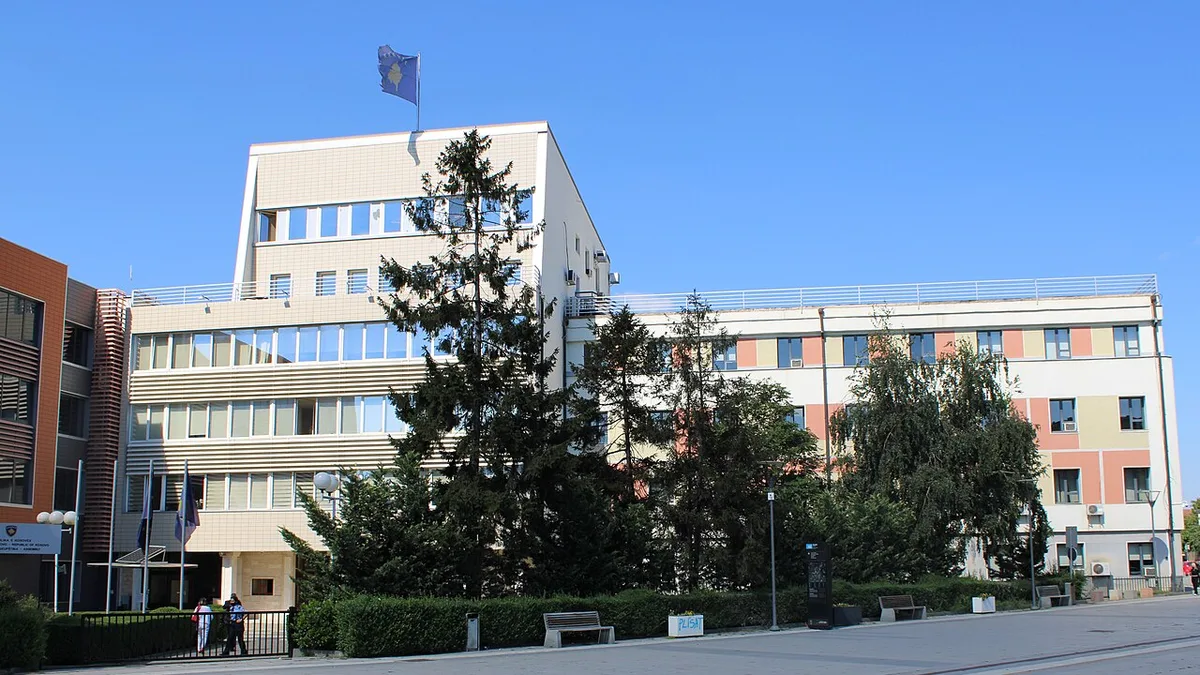
The sources give different locations for the ceremony. KoSSev reports it was held in the courtyard of the Presidency in Pristina, while Danas, citing RTK, says it took place in front of the Kosovo parliament building. Radio Free Europe notes that the Constitution was handed over in front of the building, after which both women went into the Presidency building. According to Danas, Prime Minister Kurti and Kosovo Security Force commander Bashkim Jashari attended, along with representatives of institutions and parties, and KoSSev adds family members and ambassadors. KoSSev also noted at the time of reporting that news of the completed ceremony was not yet on the Presidency’s website.
She took the oath before deputies on the same night, after the election, and said then:
“I will be the president of all citizens, regardless of political, ethnic or social affiliation. I will work for unity, justice, development and the strengthening of our institutions. Kosovo must advance as a democratic and secure state, with a clear Euro-Atlantic orientation and a strong friendship with our allies. I will defend the Constitution, the interests of the Republic and the dignity of our citizens.”
Siroka Pulja is 72, an economist and academic who was previously minister of energy and mining and a PDK deputy. Until her election she presided over the Academy of Sciences and Arts of Kosovo, the first woman to head the institution. In the presidency, which lasts five years, she is the third woman after Atifete Jahjaga and Vjosa Osmani. Before her election the Assembly adopted, in second reading, amendments to the Law on the Specialist Chambers, which was one of the key issues in the talks between Self-Determination and the PDK. The eight-day window for any request from deputies runs from the adoption of the decision on the election.