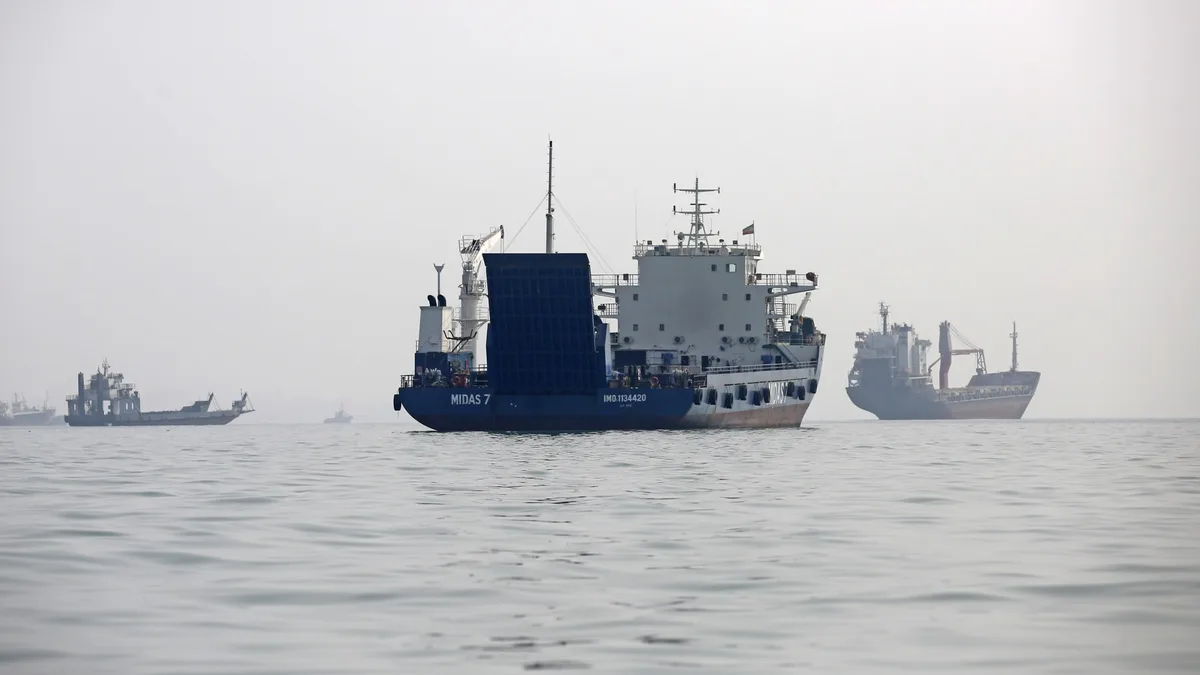
Hormuz: Iran Says Shipping Has Stopped, Brent at $114
Iranian state TV reports that traffic by ships defying Iran's rules through the Strait of Hormuz has stopped. Brent is near $114, and E3 and R4 ministers met in Istanbul for the first time.
The price of a barrel set around the Strait of Hormuz reaches Serbian fuel pumps with a delay, which makes Friday, October 23, news for domestic drivers too. Iranian state television, citing an unnamed source close to the Revolutionary Guard navy, reported that traffic by ships Tehran calls disobedient, meaning those that do not follow Iranian rules, has been completely halted in the Strait of Hormuz. Brent crude reached about $114 a barrel the same morning.
The claim comes from one party to the war and has not been independently confirmed, which matters for any assessment of it. It also does not describe a blockade of the whole strait, only of traffic by a certain type of vessel.
What does Tehran say, and what does it threaten?
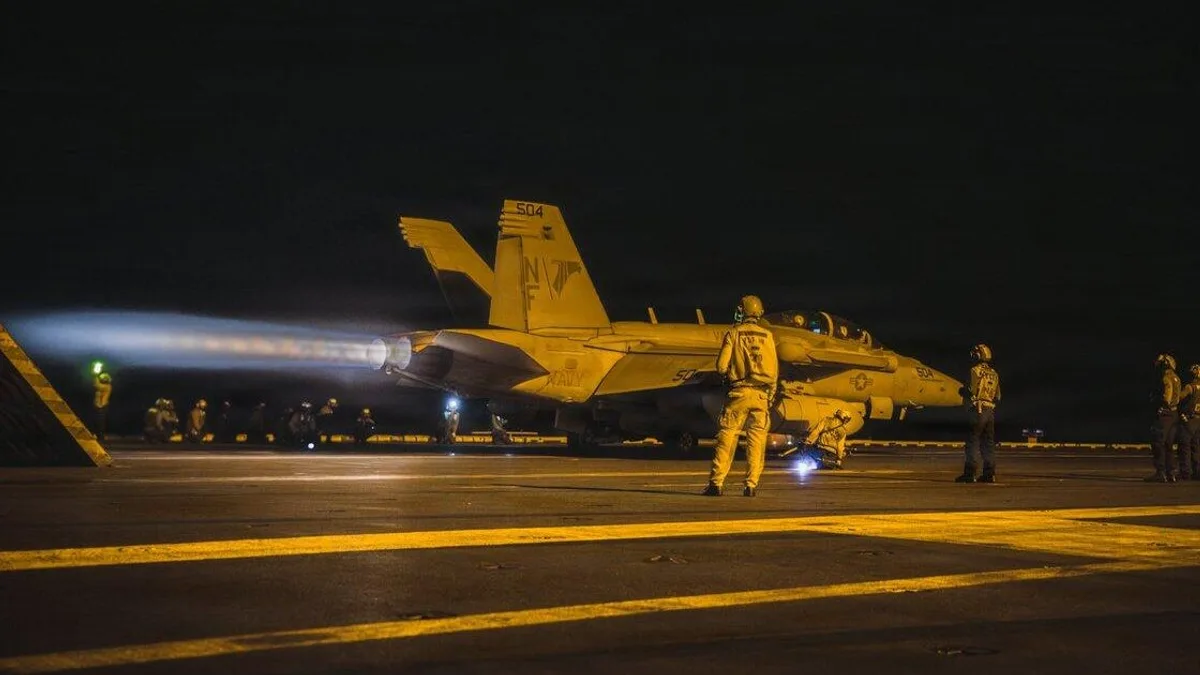
According to a report by CBS News, Iranian state television published the news on Friday at about 8:30 a.m. Eastern time. The same source warns that Iran’s response will be “much harsher” if American military escorts of ships or ship-to-ship transfers of oil continue.
On Thursday, October 22, the Revolutionary Guard claimed it had hit seven ships: four tankers transferring oil in the northern Persian Gulf and three vessels that struck mines west of the strait. According to CBS, four of the ships were hit after passing along the southern route backed by the United States.
What is confirmed and what is not
The British maritime agency UKMTO confirmed only two attacks in the same period: on the Kuwaiti-flagged tanker Al Dasma and on the Liberian-flagged Soyia. The crews of both ships are safe. The Revolutionary Guard did not publish the names or flags of the ships, or any casualty figures, and the Associated Press could not independently establish how many ships were actually hit.
The wider picture is still not harmless. According to the analytics firm Kpler, 18 tankers were attacked in the two weeks before Thursday, and the International Maritime Organization counts 119 maritime security incidents and 24 seafarers killed since the war began on February 28.
How much has oil risen?
At 5:33 a.m. GMT on Friday, Brent traded at $114.00 a barrel, about 1.2 percent above the previous day; other sources put the same morning at $114.30 and $114.50. US crude WTI stood at $100.40, up 1.4 percent. On Thursday morning Brent was at $112, its highest since May 18, and the futures contract was recorded at $111.70 that day. Over the past week, according to FinanceFeeds, Brent is up by roughly six dollars.
ING analysts Warren Patterson and Ewa Manthey said on Friday that their fourth-quarter average forecast of $80 is now “unattainable”.
Why did ministers meet in Istanbul?
At a hotel above the Bosphorus, Turkish Foreign Minister Hakan Fidan hosted the first joint meeting of the E3 and the newly formed R4 on Friday. The first group is Britain, represented by Ed Miliband, France, represented by Jean-Noel Barrot, and Germany. The second is made up of Turkey, Saudi Arabia, Pakistan and Egypt. CBS counts seven countries, while Turkish Minute and Al-Monitor say eight, because the Italian minister also sat at the table.
The agenda covered the Strait of Hormuz, the situation in Saudi Arabia and Yemen, the Palestinians and an end to the war between Russia and Ukraine. No joint statement had been issued by the time of publication.
The British Foreign Office said in a statement ahead of the meeting:
Despite positive progress by the United States and regional partners, passage through the strait remains at risk, and traffic through the waterway is significantly below pre-war levels.
The French ministry described the meeting as the first “in this format” and held “against a backdrop of extreme instability and uncertainty in the region”. Barrot told reporters after the meeting, as reported by Reuters:
Further escalation between Iran and the United States would leave no winners.
Fidan said at a conference on mediation that “lasting solutions cannot be imposed from outside”. Ankara is using the hosting role to strengthen its regional standing, among other things through the Mecca Defense Alliance, an agreement it launched with Pakistan and Saudi Arabia in August.
Washington: elections before new strikes
President Donald Trump accused Iran on Truth Social on Thursday, October 22, of deliberately pushing up the oil price ahead of the American elections:
Iran is doing everything it can to raise the price of oil before the American midterm elections.
In the same post he added: “They are even making up fake hits, mines and everything else.”
The US ambassador to the United Nations, Mike Waltz, told the Financial Times that the war with Iran could last another year, and when asked about hypothetical scenarios he answered: “I won’t put forward hypotheticals. One would hope they come to the table in a meaningful way before that.”
A day earlier, ABC News and The New York Times reported, citing Israeli sources, that the Israeli and American militaries have drawn up plans for new joint strikes on Iran after the American elections on November 3. According to an Israeli source for ABC, the targets would be petrochemical plants and nuclear sites such as Pickaxe Mountain, without strikes on civilian infrastructure such as power plants. White House spokeswoman Anna Kelly responded to ABC in a statement:
The United States will not attack Iran at any point before the midterm elections.
A White House official added that the administration does not comment on “sensitive military plans that may or may not exist”. Eleven days remain until the American elections on November 3, and Israelis vote on October 27.