Iran Says Two Tankers Hit Mines in Strait of Hormuz
The Guard says both ships caught fire, with no independent confirmation, while oil flow through the strait fell from 20.8 million barrels on Oct. 8 to 2.9 million on Oct. 11.
Iran’s Revolutionary Guard (IRGC) said on Saturday, Oct. 17, that two crude oil tankers hit sea mines in the Strait of Hormuz and caught fire. Disrupted shipping through the strait has already pushed up global energy prices and inflation, and through import prices that is felt in Serbia too.
What does Tehran claim about the two tankers?
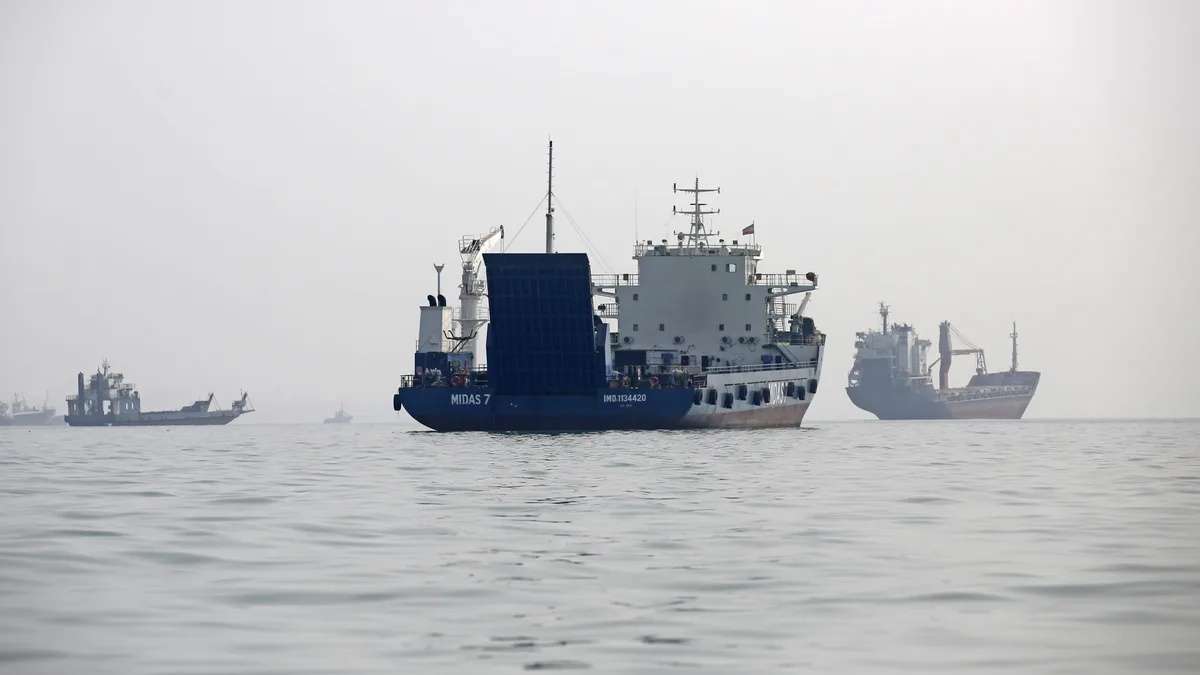
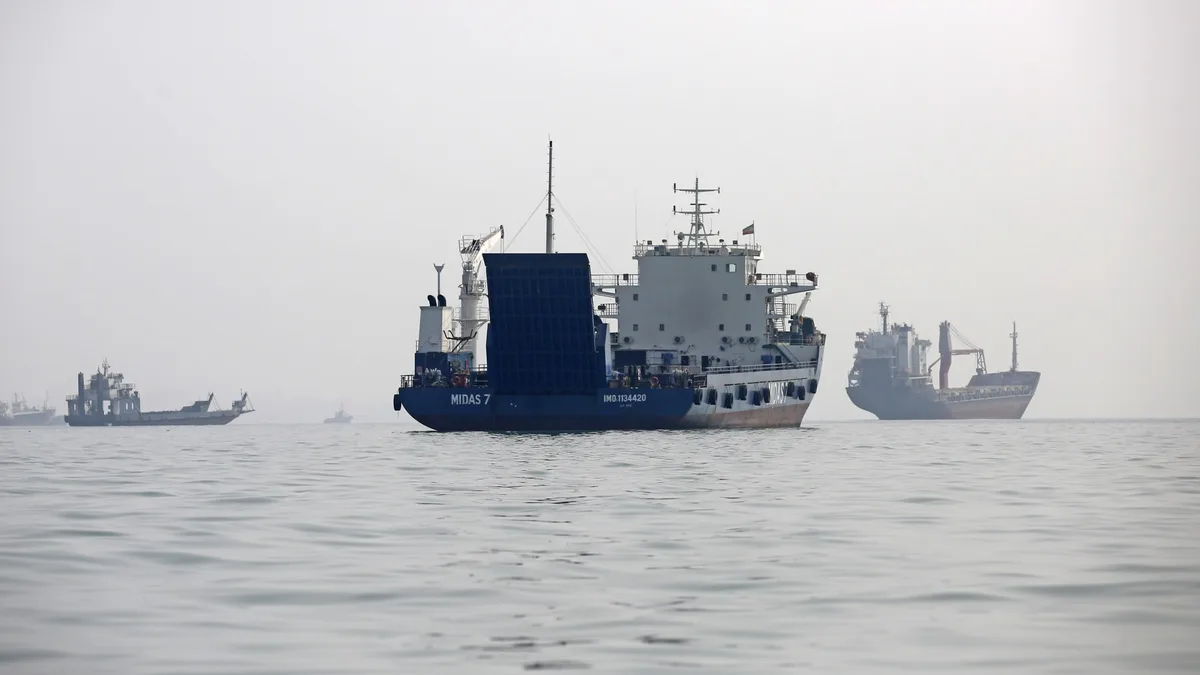
According to the IRGC statement, the first tanker struck a mine, causing an explosion and a “fierce fire,” while the second, as Iran’s state news agency IRNA reported, was engulfed by a “large flame.” Both vessels were carrying about two million barrels of crude each, close to four million in total. The names of the ships and the origin of the cargo have not been released.
IRNA also gives Iran’s account of why the strikes happened. The vessels, the agency says, switched off their positioning systems and radar and tried to pass along a route Iran had not approved. The IRGC adds that one tanker tried to cross the strait “with US support,” and that the other was left immobilized after the blast. There is no independent confirmation of these claims.
The warning that came before the strikes
This week the IRGC navy commander, Rear Admiral Ali Azmaei, said that any ship that turns off its navigation systems will be treated as hostile. Since late February, when American and Israeli attacks on the country began, Iran has demanded that every vessel obtain its permission to transit the strait. Before the war, roughly a fifth of the world’s oil consumption passed through this waterway. The United States, in turn, has imposed its own naval counter-blockade on Iranian oil exports.
This is not the first report of burning tankers this weekend. The Iranian military said earlier that two tankers caught fire on Thursday and Friday in an Iranian restricted zone in the Gulf of Oman, and maritime observers reported that two tankers were hit on Friday in waters off Saudi Arabia. From the sources we reviewed, it is not clear whether these are the same ships. Maritime officials also reported on Wednesday that a container ship and a bulk carrier sank near the strait after being struck by projectiles, in separate incidents. We covered the sinking of the GFS Pride and the Cape Dao earlier.
How much oil has stopped flowing?
Attacks around the strait have risen over the past two weeks. Last Sunday, six ships were attacked in and around the strait, the most in a single day since the war began, according to data from the company Vanguard, the International Maritime Organization and the British maritime agency UKMTO. Tehran justifies the stepped-up attacks by pointing to the American blockade of its ports and to tougher sanctions imposed last month.
The effect shows up in data from the company Kpler: about 20.8 million barrels of oil moved through the strait on Oct. 8, but only 2.9 million on Oct. 11, a drop of roughly 86 percent in three days.
What is Washington saying?
U.S. President Donald Trump explicitly ruled out nuclear weapons against Iran. “I wouldn’t use a nuclear weapon,” he said in an interview with the website Newsmax on Thursday. Asked about sending ground forces into Iran, he answered: “No, I don’t see that, I don’t see that.” Trump believes a deal to end the war will be reached after the American midterm elections on Nov. 3.