Ovaries Keep Changing After Menopause, 28-Woman Study Finds
Researchers at Northwestern University and the Buck Institute analyzed the ovaries of 28 postmenopausal women and found hundreds of proteins whose levels shift with age.
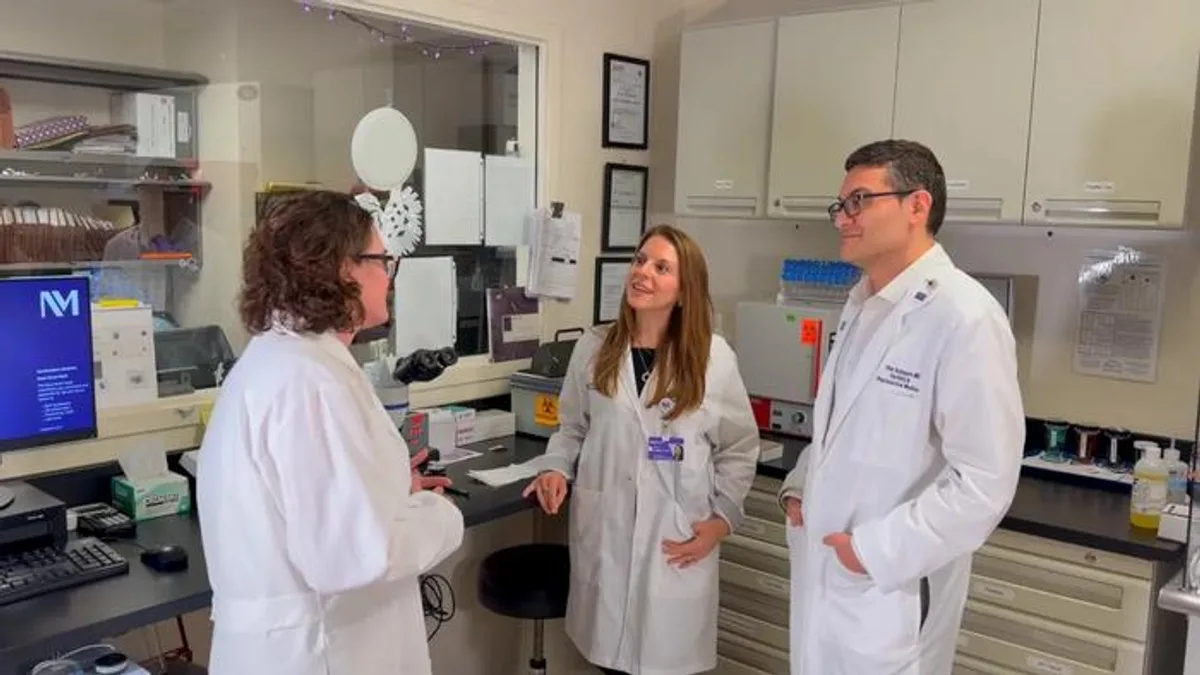
Researchers at Northwestern University’s Feinberg School of Medicine and the Buck Institute for Research on Aging published a study of the ovaries of 28 postmenopausal women in Aging Cell on October 14, 2026. In healthy tissue they measured 5,812 protein groups and found that the makeup of the ovary keeps changing for decades after egg production stops. The paper is titled “The Human Ovary Exhibits Dynamic Molecular Remodeling in the Decades Post-Menopause.”
The subject is not new to the lab of Francesca Duncan, associate professor of reproductive science at Feinberg. Her group was the first to show, in 2016, that ovaries become more inflamed, more fibrotic and stiffer with age, much like scarring in other tissues. Because tumor cells do better in a stiff, collagen-rich environment, the team has since been testing whether that change could make the ovary more welcoming to cancer. The group had earlier found similar signs of ongoing remodeling in the ovaries of postmenopausal mice.
How was the study done?
The team analyzed ovaries from 28 women aged 50 to 75, a span of 25 years after menopause. The tissue was normal and cancer-free. Human ovarian tissue is hard to obtain, so, as Duncan notes, a collection like this is unusually valuable. Rather than compare young and old ovaries across a whole lifetime, the researchers deliberately limited themselves to the postmenopausal years to capture the changes that continue then.
The measurements were led by the team of Birgit Schilling, director of the Mass Spectrometry Center at the Buck Institute. The first author is Mark Watson, a research associate at the institute. Proteomics, a method that uses mass spectrometry to measure thousands of proteins at once, made it possible to look for the same patterns in every sample through several kinds of statistical analysis. The research was funded by SenNet, a program of the US National Institutes of Health (NIH).
What changes after menopause?
The ovaries of younger postmenopausal women had more proteins that maintain the structure of cells and tissues. In older women there were more proteins tied to inflammation, immune activity and the constant breakdown and rebuilding of the tissue around cells. The biggest differences appeared between women in their fifties and those aged 70 and over. Older ovaries also showed patterns known from cellular senescence, a state in which damaged or aged cells stop dividing but stay active and send signals to the surrounding tissue.
Schilling described the results this way:
“When we analyzed the data in multiple different statistical ways, what became clear across all these methodologies is that the ovary was not stagnant. In fact, over the decades, there were quite dramatic differences: Some proteins’ levels would go up with age and some proteins’ levels would go down, which tells us this organ is quite dynamic.”
She added that the ovary is more than a reproductive organ: “It really influences how somebody ages because it speaks to all these other organs, such as the brain, and also to the bone, and women after menopause often experience a lot of bone problems.”
Where does this touch on ovarian cancer?
Some proteins previously linked to ovarian cancer were more abundant in older ovaries, and the signal was strongest in women in their sixties. The tissue itself was healthy. The authors stress that this does not mean the ovaries were cancerous or precancerous, only that healthy ovarian aging and cancer share some biological processes.
Duncan sees a possible third link: ovarian aging as a “third hit” after genetic and environmental ones. She posed the resulting question publicly:
“So can we target the aging ovary therapeutically to lower the risk of ovarian cancer, or can we develop novel biomarkers of ovarian cancer?”
What does the study not show?
The paper does not address whether healthy ovaries should be removed after menopause. It is also unknown whether the observed changes are helpful or harmful, that is, whether they contribute to disease or are simply part of normal aging. Duncan says that is the next step: “We do not yet know if there’s ever a point in a woman’s life when this organ is no longer beneficial and it’s actually harmful.”
The differences between age groups show that the tissue changes, but they do not show that those changes cause disease in other organs. A sample of 28 ovaries is small, and the link to cancer rests on proteins that tend to appear alongside it. The researchers are therefore checking next whether these changes could serve as new biomarkers of cancer.