Ebola vaccine Ervebo triggers T cells against Bundibugyo
German researchers measured T cell responses in 20 vaccinated people on day 28: 13 reacted to the Bundibugyo strain, for which no approved vaccine exists.
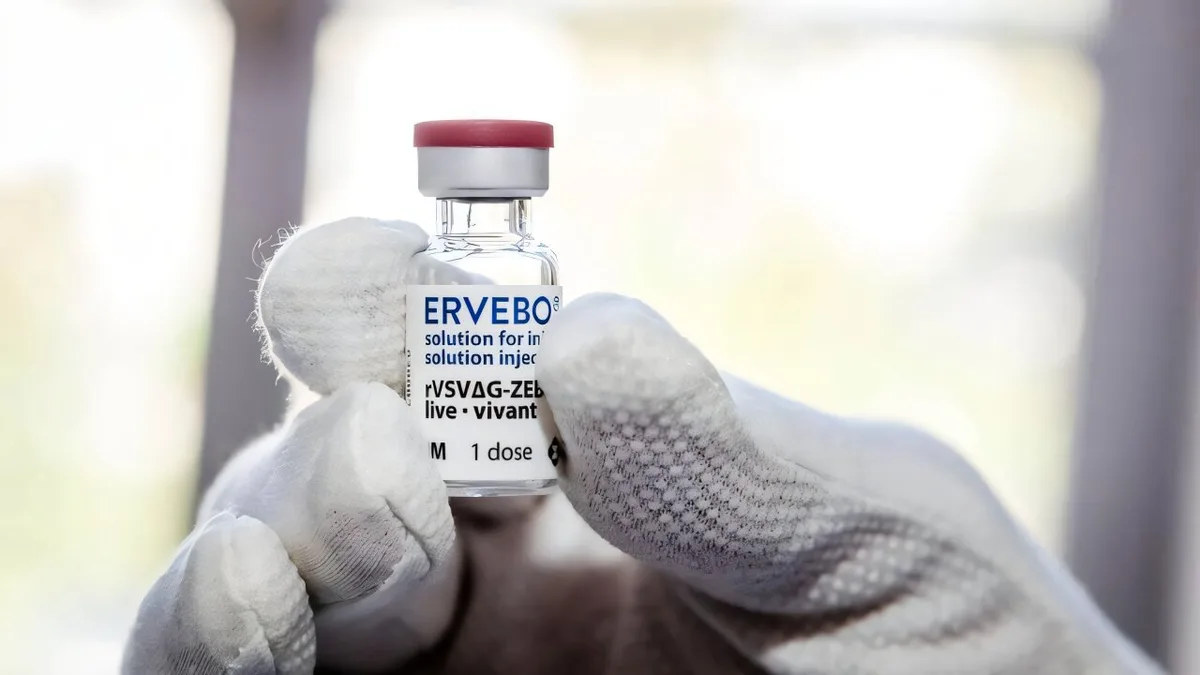
The German Center for Infection Research (DZIF) announced on October 14, 2026 that a single dose of the licensed vaccine Ervebo triggers T cells in vaccinated people that also recognize the Bundibugyo virus, the Ebola strain currently spreading in the Democratic Republic of the Congo. The vaccine was developed against a different strain, Zaire, and no approved vaccine exists for Bundibugyo. The results appear in The Lancet Infectious Diseases, and the first author of the paper is Dr. Leonie Mayer.
Who ran the study and what was tested?
The research was led by Dr. Leonie Mayer and Prof. Marylyn Addo of the University Medical Center Hamburg-Eppendorf, together with Prof. Christof Geldmacher and Dr. Roland Londt of LMU University Hospital in Munich. The paper carries the DOI 10.1016/s1473-3099(26)00529-3. The team tested Ervebo, which is made by Merck Sharp & Dohme and was developed against the Zaire strain. In the paper it is referred to as VSV-EBOV.
T cells are the part of the immune system that recognizes pieces of a virus. In many viral infections they help control the infection and protect against severe disease. Because they can recognize conserved parts of a virus, they may also react to related viruses, but whether that holds for Bundibugyo after vaccination in humans was not known until now. The researchers therefore compared three viruses: Zaire (abbreviated EBOV in the paper), Bundibugyo (BDBV) and Sudan (SUDV). The Zaire and Bundibugyo glycoproteins match in 66.3 percent of their amino acids, and Zaire and Sudan in 56.3 percent. The first author described the method:
“Using multiple sequence alignment, that is, a parallel comparison of several amino acid sequences, we identified several sequences that are highly conserved among the glycoproteins of EBOV, BDBV and SUDV, and we examined how these regions interact with the immune system of vaccine recipients.”
The team then tested the selected glycoprotein regions on vaccinated people.
How many people responded to which strain?
The T cell response was measured in 20 vaccinated people, 28 days after a single dose of the Ervebo vaccine:
- 16 participants responded to the glycoprotein of the Zaire strain
- 13 participants responded to the glycoprotein of the Bundibugyo strain
- 7 participants responded to the glycoprotein of the Sudan strain
Most vaccinated people who reacted to Zaire also had T cells that react to Bundibugyo. The response to Sudan was less common than the response to Bundibugyo. Geldmacher summed up the result this way:
“Our findings provide the first evidence that vaccination against Ebola virus with VSV-EBOV induces T cell responses that cross-react with BDBV.”
Why does this matter now?
According to figures cited by DZIF, the Bundibugyo outbreak in Congo is the second largest Ebola epidemic in the world, with more than 6,000 confirmed cases and a fatality rate of 48 percent. These numbers come from the institute’s announcement, and we have not checked them with health authorities. Ervebo had earlier shown partial cross-protection in monkeys, and antibodies that react to Bundibugyo had already been described in vaccinated people. What was missing was data on T cells in humans, and that data now exists.
The World Health Organization had earlier announced a vaccine trial in Congo by the end of October. The DZIF study does not deal with that trial, but Geldmacher linked its significance to the ongoing epidemic:
“Although the study has limitations because of its small sample size, in the absence of a BDBV-specific vaccine it supports a systematic evaluation of the EBOV vaccine in clinical trials during the current BDBV outbreak.”
The work was funded by DZIF, the European Vaccines Hub for Pandemic Readiness and Collaborative Research Center 1648, which is financed by the German foundation DFG.
What does this study not prove?
It does not prove that Ervebo protects against disease caused by the Bundibugyo virus. The researchers measured T cells in vaccinated people, not outcomes in infected ones, and the authors state it is not known whether these cells improve the course of illness in people infected with this strain. The only support comes from earlier monkey studies, which suggest that T cell responses are needed for the protection the vaccine provides. A sample of 20 people is small, as Geldmacher himself acknowledges, and the response was tracked only on day 28 after a single dose. The finding therefore justifies a clinical trial, but it does not replace one.