Plenkovic on Student List: No European Flags in Campaign
Croatia's prime minister wants the winners of Serbia's election to explain their stance on the EU, and says six of Croatia's eight demands on Montenegro remain open.
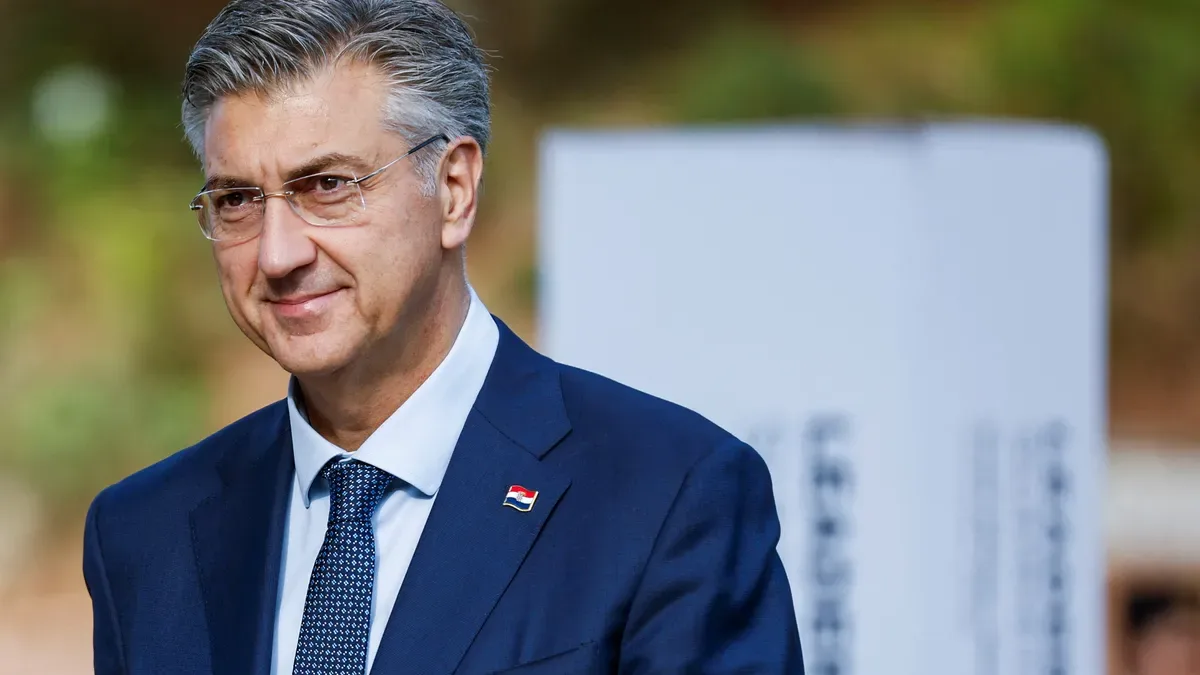
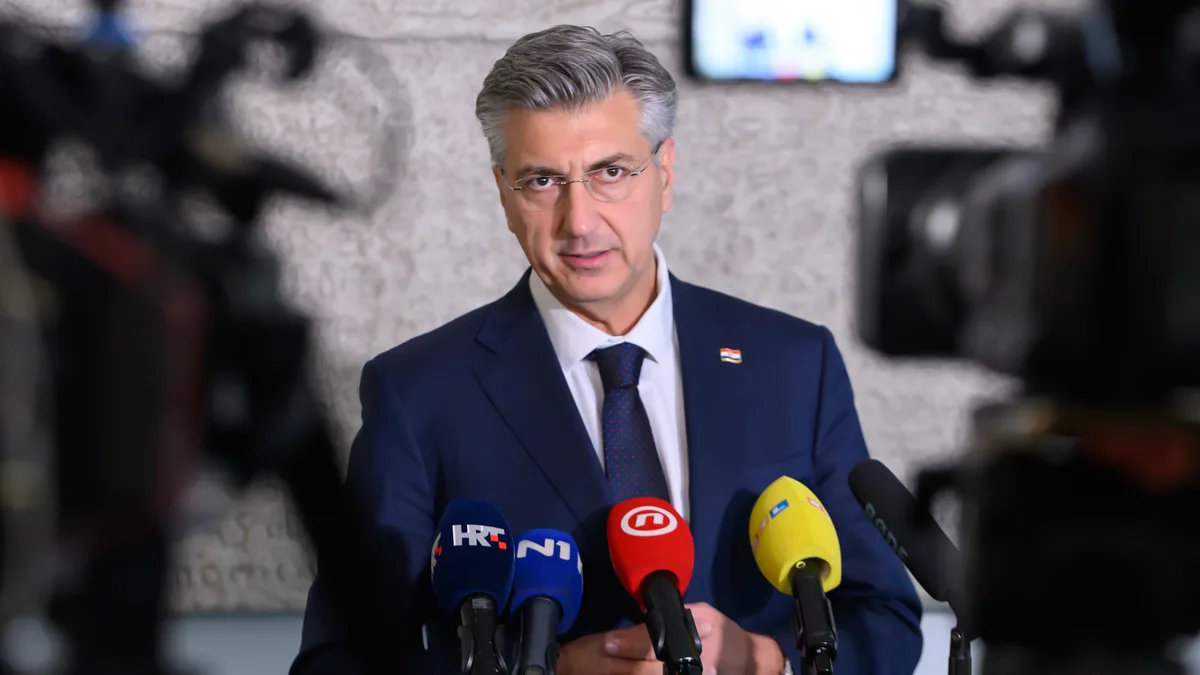
Croatian Prime Minister Andrej Plenkovic said that the Student List, the winner of Serbia’s parliamentary election, must explain where it stands on the European Union. Croatia is an EU member and one of the countries that decide on Serbia’s accession, so his assessment is heard in Belgrade as well. He made the remarks at an enlargement conference organized by Euronews, and they were reported by N1 and Croatian Radiotelevision.
What did Plenkovic say about the Student List?
After the Student List’s victory, Plenkovic said, it is best to wait and see what the future government looks like and what policy it pursues. “We don’t know exactly what the Student List’s positions are. Their views on European issues are, let’s put it that way, complex,” the Croatian prime minister said.
He added that the list did not reveal much about its plans during the campaign, which he said can be understood from a tactical standpoint. He then turned to what he expects of it now that it is taking on responsibility:
“But now that you are taking on responsibility, you have to explain what you stand for. What struck all observers was that there was not a single European flag during the election. That could hardly be read as a distinctly pro-European movement.”
This is the assessment of the head of government of a member state, delivered at a public event, and not a formal position of the European Union. Plenkovic also spoke about what Zagreb wants from Podgorica, and that made up most of his appearance.
What does Croatia want from Montenegro?
Plenkovic said Montenegro can close its negotiating chapters by the end of this year if there is a sincere will to resolve the issues that fall under Chapter 23 (judiciary and fundamental rights) and Chapter 31 (foreign, security and defense policy). In his words, those chapters contain issues that previous Montenegrin governments did not handle properly.
Croatia has put eight demands to Montenegro, and two have already been met. The Montenegrin government recently decided to rename a pool in Kotor and formally approved a memorial plaque at the former Morinj camp. The remaining six concern:
- establishing the fate of missing persons
- compensation for the Morinj camp detainees
- prosecution of those responsible for war crimes
- resolving property and legal questions of Croatian families
- the border question
- the return of the training ship Jadran
N1 writes “two of eight demands” in one paragraph and mentions “two of six” in another. Plenkovic’s figure of six remaining, which both outlets report, supports the first count: eight demands, two met, six open.
The prime minister sorted the remaining demands by jurisdiction:
“Six remain, four of which fall solely under the executive branch. Two are more complex because they reach into the area of the judiciary or concern data on persons who went missing during the aggression of Yugoslavia and Milosevic’s regime against Croatia.”
Can Montenegro join the Union by 2028?
Plenkovic called on his colleagues in the Council to help Podgorica, and then named a date:
“I call on my colleagues in the Council to help Montenegro resolve these issues. If that happens, I believe that 2028 as the date for completing the process, which for now is only a proposal, is achievable.”
The prime minister, then, does not present 2028 as his own proposal but as an existing target that, in his estimate, is achievable only if the open issues are resolved. He also said he has the impression that work on them is under way, and that if the process continues in a good spirit it can be brought to an end.
Plenkovic rejected suggestions that Zagreb is holding Montenegro back. He compared Croatia with member states that block some candidates even from starting negotiations:
“If we had wanted to be an obstacle to Montenegro’s accession, our policy would have been completely different. In fact, we have been very friendly and constructive.”
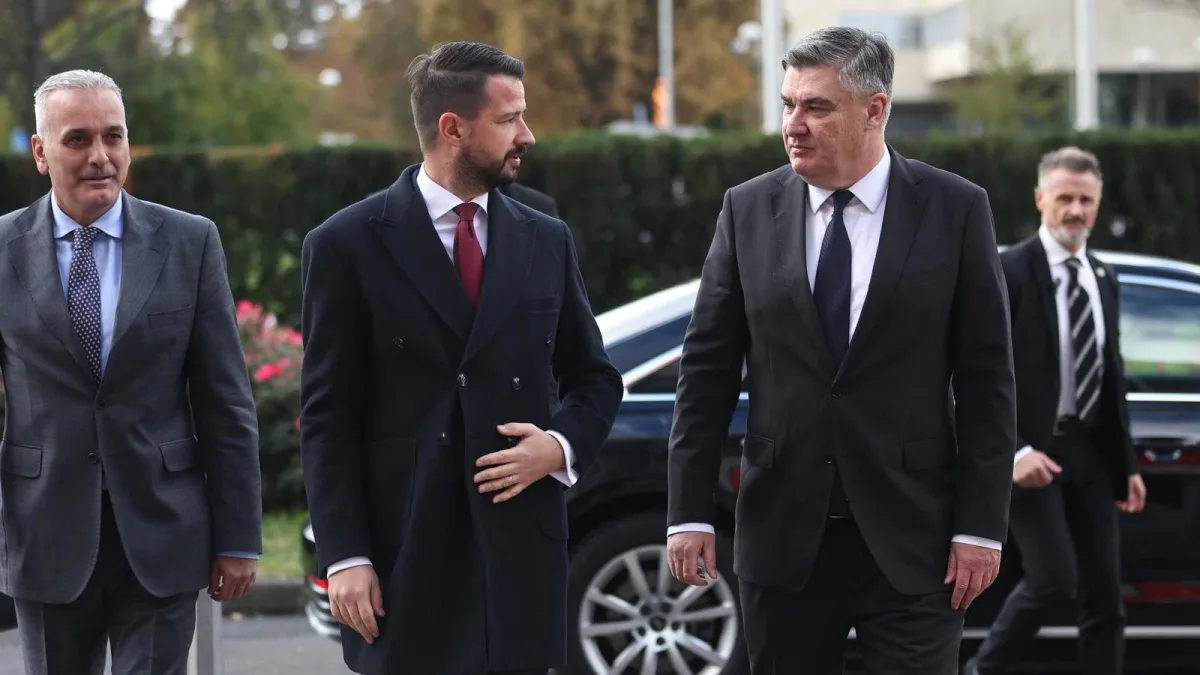
Montenegro’s path to the Union was also discussed at the meeting between Milanovic and Milatovic in Zagreb, which we reported on earlier.
How does Plenkovic see EU membership?
Asked about the benefits of membership, Plenkovic said that in his view it is positive in every respect and that he sees no significant downsides. He added that issues connected with the Union are not explained well enough, and that telling true information from false in today’s communication space is a serious challenge.
He named three main benefits: stability, security and an opportunity for economic development; the position of net recipient of funds from the European budget, especially for new members; and a strong internal market that encourages competitiveness, entrepreneurship and investment. He described the first benefit this way: “You become part of a powerful organization that helps you cushion all kinds of external shocks and crises.”