Plenkovic ties Montenegro's EU talks to border principles
Croatia's prime minister told parliament Montenegro will not close its accession talks unless it accepts the Badinter principles. Podgorica answers with a two-step proposal.
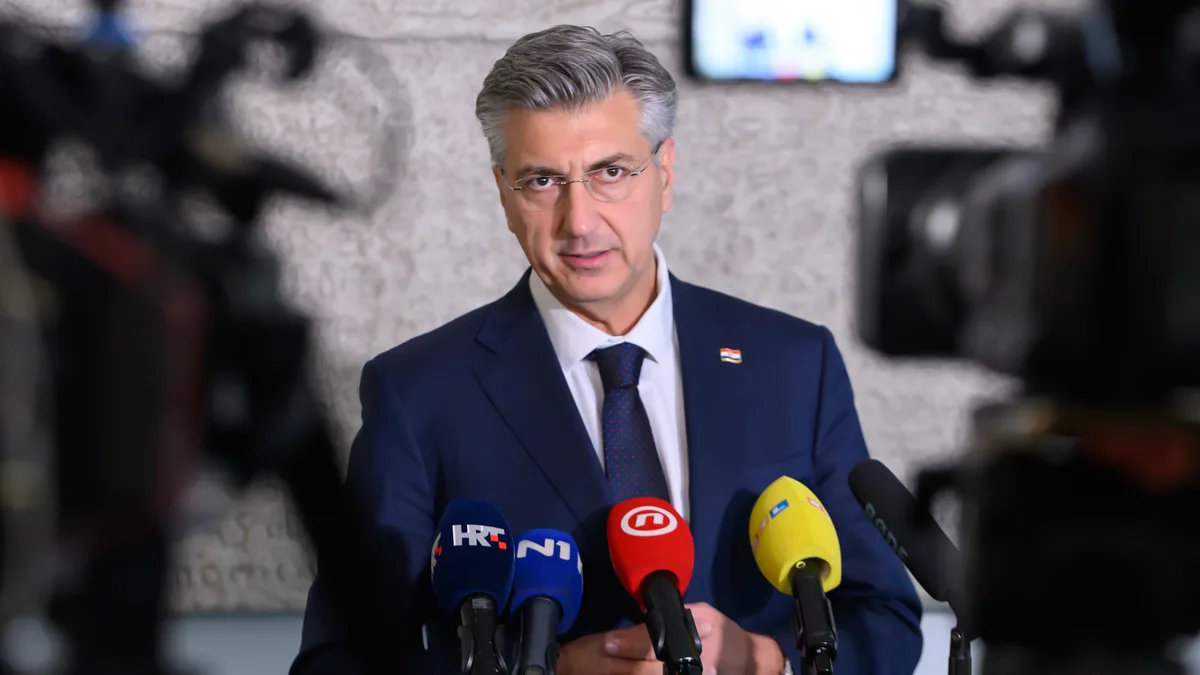
Whether a bilateral border dispute can become a condition for closing accession talks concerns more than Podgorica and Zagreb. It matters to every Western Balkan candidate, Serbia included. Croatian Prime Minister Andrej Plenkovic put it plainly in the Croatian Parliament: Montenegro will not close its European Union membership negotiations unless it accepts the Badinter Commission’s principles for demarcating the land border. The office of Montenegro’s prime minister replied on Wednesday, November 11.
What did Plenkovic say in parliament?
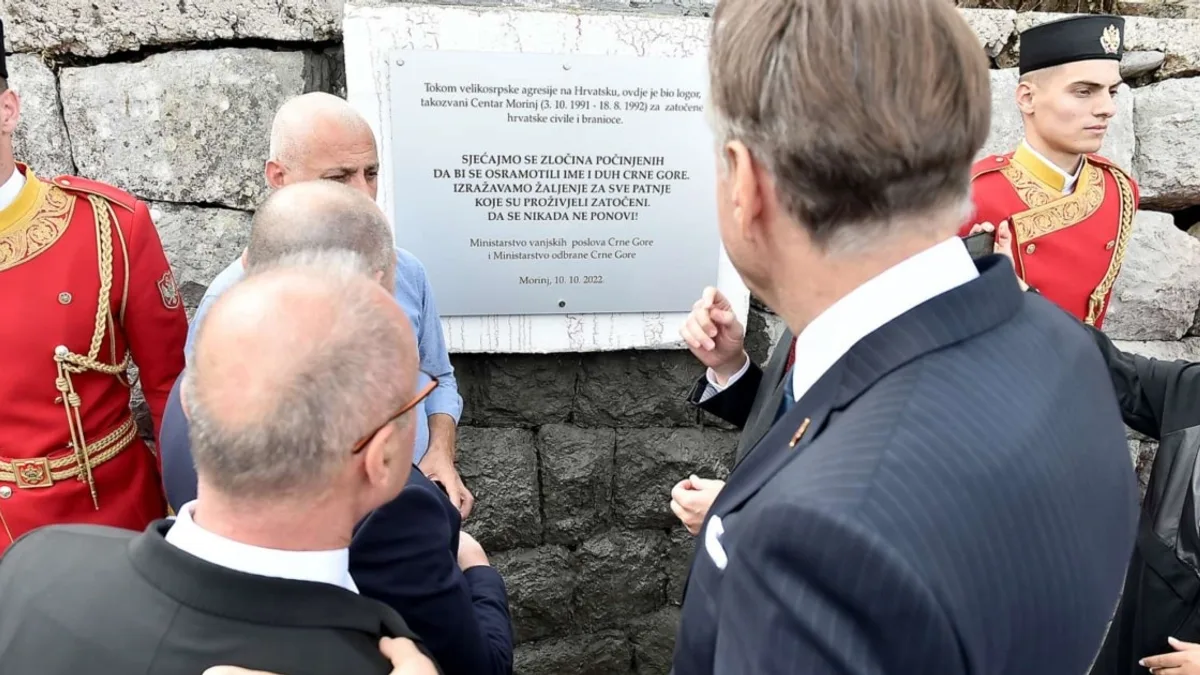
The occasion was a question from HDZ lawmaker Andro Krstulovic Opara. He criticized Montenegrin President Jakov Milatovic, who calls the memorial plaque in Morinj unlawful, and added that before coming to Zagreb Milatovic had advised against accepting a border treaty with Croatia. Krstulovic Opara asked the prime minister:
“Do they know that, if they do not sign that treaty, we may take it as a sign that they have not given up their territorial claims against Croatia? Are they aware of that?”
The lawmaker also recalled that Plenkovic managed to have a timeline for completing the talks with Montenegro removed at the European Council, which leaves Montenegro enough time to decide for itself what to do about the issues Croatia has been raising for years.
Plenkovic replied that Podgorica has been sent a draft treaty on demarcating the land border, based on the Badinter Commission’s principles, and that it should be acceptable. The interim regime currently in force, he said, starts from exactly that premise. He then added:
“If that does not suit them, it means they are sending a message: we cannot accept the Badinter Commission’s principles, we do not believe that republican borders are also the borders between the states that emerged after the former SFRY. Then that is a serious problem. And in that case Montenegro will not close its accession negotiations as it plans to. Let me be perfectly clear.”
What is Podgorica’s answer?
In reply to questions from the broadcaster RTCG, the office of Montenegro’s prime minister said it does not question the application of the Badinter principle. Before final demarcation, though, it argues, the specific line of the former inter-republic border must be established, and in that area it was never fully defined. Montenegro has no territorial claims against other states, the office stressed, and honors every agreement it has signed with Croatia. In its reply the office said:
“The point is how the border ran in the specific area and how, together with the sea and the tripoint, it is determined by a single state border treaty.”
Podgorica wants the land section, the sea and the tripoint covered by one treaty. The office also notes that Slovenia and Croatia accepted the same principles, yet their own border question is still unresolved. Montenegro, it says, has already settled demarcation with Bosnia and Herzegovina and Kosovo, while with Croatia a Protocol on the interim regime applies until a state border treaty is concluded. “That regime was in force when Croatia became an EU member too,” the office says, adding that the Protocol expressly does not prejudge the final demarcation.
Two steps and a call on European documents
Montenegro proposes a two-step approach:
- first, bilateral talks between Podgorica and Zagreb
- if no agreement is reached within a reasonable time, a joint approach to an appropriate international body
The reply reads:
“We propose a two-step approach: first bilateral dialogue, and if, with the good will of both sides, no solution is reached within a reasonable time, a joint appearance before an appropriate international body. That is the most responsible and most constructive path, because it preserves the dignity of both sides and rules out any impression that anyone is imposing a solution on the other.”
The office cites the Declaration on the Promotion of European Values in Southeast Europe, which the Croatian Parliament adopted unanimously on October 21, 2011, and which, it says, took the position that bilateral issues, including border disputes, should not stand in the way of candidate countries’ accession. It also points to the European Commission’s 2018 Western Balkans strategy, under which the EU “will not import bilateral disputes,” and border disputes that cannot be settled bilaterally are referred to binding and final international arbitration.
The office closed its reply with this message:
“We are not looking for shortcuts on the European path, nor for anyone’s favor. We ask that all issues be viewed realistically, responsibly and in a European spirit.”
What remains open?
The two positions differ on one point. Zagreb wants Podgorica to accept the Badinter Commission’s principle as the basis of a treaty, while Podgorica says it accepts it but that the line of the inter-republic border in the disputed area must be established first. The Croatian prime minister spoke in parliament, and Podgorica’s reply came in written answers to RTCG. The sources do not give a date for new talks between the two governments.